In automotive parts machining, the tap is a critical tool for creating internal threads, often referred to as the “industrial tooth.” Tapping is a key process in machining, as thread quality directly affects the reliability and sealing of subsequent assemblies.
Below is a structured guide covering tap classification and selection, material and coating, common problems, and sales points, designed to help you get up to speed quickly.
I. Tap Classification & Selection (By Machining Method)
This answers the most common customer question: “Which tap do I use for this hole?”
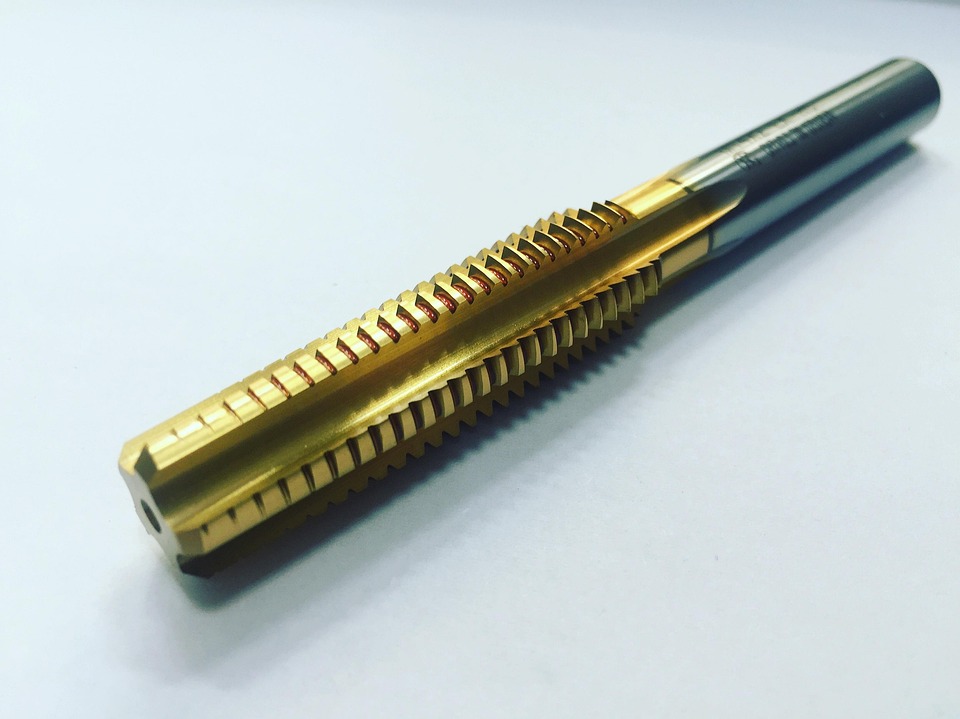
1. Cutting Tap vs. Forming Tap – The Fundamental Distinction
| Feature | Cutting Tap | Forming Tap |
|---|---|---|
| Mechanism | Removes material by cutting | Displaces material plastically to form thread |
| Material Suitability | Most materials, especially cast iron and high-hardness materials | Ductile materials (elongation ≥10%): low-carbon steel, stainless steel, aluminum, copper alloys |
| Key Advantage | High versatility | No chips, 30-40% stronger threads, 2-40x longer tool life, excellent surface finish |
| Key Limitation | Generates chips, requires chip evacuation | Ductile materials only, strict hole size requirements |
Sales Points:
-
For aluminum, low-carbon steel, stainless steel → Recommend forming taps. Emphasize “chip-free processing, higher thread strength, longer tool life.”
-
For cast iron, hardened steel → Only cutting taps work.
-
Forming taps are ideal for high-volume, high-precision automotive threading (e.g., connecting rods, pistons).
Sales Script: “Since your part is aluminum, a forming tap is the best choice. No chip issues, 30% stronger threads than cutting taps, and much longer tool life.”
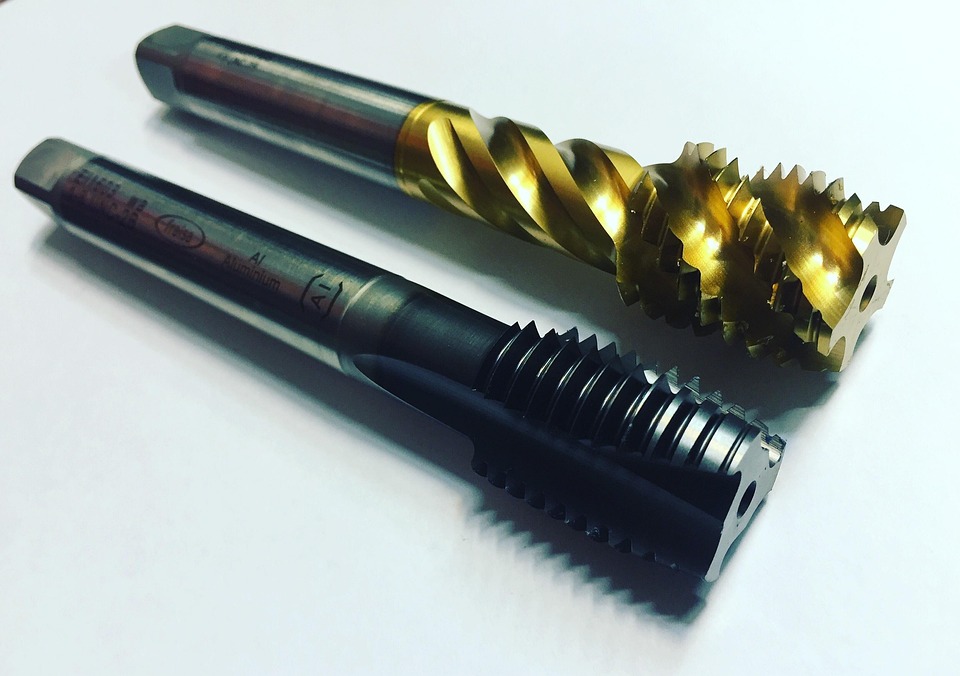
2. Three Flute Types for Cutting Taps (By Chip Evacuation Direction)
| Type | Chip Direction | Best For | Example |
|---|---|---|---|
| Straight Flute | Down or up (dependent on setup) | Short-chip materials (cast iron, aluminum, hardened steel); both through & blind holes | CoroTap® 100 |
| Spiral Flute | Upward (toward shank) | Blind holes; chips are evacuated upward | General-purpose spiral tap |
| Spiral Point (Gun) | Forward (ahead of tap) | Through holes; chips pushed forward, no wrapping | EGI Spiral Point Tap |
Quick Selection Guide:
| Customer says… | You recommend… |
|---|---|
| “Blind hole, stainless steel” | Spiral flute tap (upward chip evacuation) |
| “Through hole, cast iron” | Spiral point (gun) tap (forward ejection) |
| “Aluminum, both through & blind holes” | Straight flute or forming tap |
| “Hardened steel, 50+ HRC” | Straight flute tap, solid carbide |
3. By Thread Standard
| Standard | Common Sizes | Application |
|---|---|---|
| Metric | M3-M20 | Most common, mainstream automotive parts |
| Inch (UN/UNF, Whitworth) | UNC, UNF, W series | Export parts, US vehicle models, aerospace |
| Pipe Thread (G, NPT, NPTF) | Various | Hydraulic fittings, air lines, oil connections |
| Round/Root Thread | Specialty profile | High-strength connections, specific automotive uses |
Sales Points: Always ask three questions first: Thread standard (Metric/Inch)? Through or blind hole? Material? These answers will lock in the tap type.
II. Tap Material & Coating
1. Tap Materials
| Material | Characteristics | Application |
|---|---|---|
| HSS | Good toughness, general purpose | Conventional steel, aluminum |
| HSS-Co (M35/M42) | Good red hardness, heat-resistant | Stainless steel, heat-resistant alloys |
| PM-HSS | Uniform microstructure, balanced wear & toughness | High-demand applications, premium taps (e.g., Seco CoroTap® 100) |
| Solid Carbide | Extremely hard, excellent wear resistance | Hardened steel, cast iron, high-speed machining |
2. Tap Coatings
| Coating | Color | Features | Best For |
|---|---|---|---|
| TiN | Gold | General purpose, improves wear | Regular steel, cast iron |
| TiCN | Blue-gray | Higher hardness, better wear | Alloy steel, cast iron |
| TiAlN / AlTiN | Violet-black | High heat resistance, high-speed dry cutting | Stainless steel, high-temp alloys |
| AlTiSiN (or similar) | Dark | Composite, superior overall performance | Demanding conditions |
Sales Points:
-
Stainless steel → Requires TiAlN coating.
-
Aluminum → Uncoated/polished (to prevent built-up edge) or TiN.
-
Hardened steel → Solid carbide + TiAlN/AlTiSiN coating.
III. Typical Automotive Applications
1. Engine & Transmission Components
| Part | Material | Thread Size | Recommended Tap | Key Requirement |
|---|---|---|---|---|
| Connecting Rod | 42CrMo (quenched & tempered, HB280-320) | M10-M24 | Forming | High precision, strength, chip-free |
| Steel Piston Top | 42CrMo (Q&T) | M12-M14 | Forming | High thread strength |
| Cylinder Block/Head | Aluminum alloy | M6-M12 | Forming or spiral flute | High volume, fast cycle time |
| Crankshaft/Camshaft | Forged steel, ductile iron | M8-M14 | Cutting (spiral flute) | Interrupted cuts, impact resistance |
2. Chassis & Suspension
| Part | Material | Recommended Tap | Key Feature |
|---|---|---|---|
| Steering Knuckle | Ductile iron | Spiral point (through) or straight flute | Interrupted cuts, impact resistant |
| Control Arm | Steel, aluminum | Forming (Al) / Cutting (steel) | High volume |
3. New Energy (EV) – Motor, Battery, Electronics
| Part | Material | Recommended Tap | Key Requirement |
|---|---|---|---|
| Motor Housing | Aluminum | Forming or spiral flute | Long holes, deep-hole tapping |
| Electronics Housing | Aluminum | Forming (M3-M8) | Small threads, tap strength critical |
IV. Common Customer Questions & Sales Scripts
Q1: “How many holes will your tap last for?”
-
❌ Bad: “1000 holes.”
-
✅ Good: “It depends on conditions—material, hole preparation, cutting data. At one customer, machining M6 in aluminum, they average 20,000 holes per tap. What’s your specific application? I can give you a realistic estimate.”
Note: Forming taps typically last 2-40x longer than cutting taps – a major selling point.
Q2: “Why do my taps keep breaking?”
| Possible Cause | Response/Solution |
|---|---|
| Pilot hole too small | “The tapping hole diameter is too small, causing excessive torque. We can help optimize the pre-drill size.” |
| Misalignment | “Check spindle-to-fixture concentricity. The tap and hole must be coaxial.” |
| Chip packing (blind hole) | “For blind holes, use a spiral flute tap. Chips are evacuated upward.” |
| Excessive speed | “Cutting speed is too high. For stainless steel, keep it at 10-15 m/min (33-50 SFM).” |
Q3: “Which is better – forming or cutting tap?”
-
Answer: “It depends on the material. Forming taps are better for ductile materials like aluminum or low-carbon steel – no chips, stronger threads, longer life. But for cast iron or hardened steel, you need a cutting tap. What material are you processing?”
Q4: “What cutting parameters should I use?”
Quick Reference Table (Cutting Speed Vc – m/min):
| Material | Speed (m/min) | Notes |
|---|---|---|
| Regular Carbon Steel | 10-20 | Cutting tap |
| Stainless Steel | 5-15 | Low parameters, TiAlN coating |
| Aluminum | 20-40 | Forming taps can go higher |
| Cast Iron | 15-25 | Cutting tap |
| Hardened Steel (50+ HRC) | 5-10 | Solid carbide tap |
V. Quick Reference Card for New Sales (Save or Print)
Ask the customer three questions:
-
What material? → Cutting vs. forming, and coating type.
-
Through or blind hole? → Flute type (spiral point/spiral flute/straight).
-
Thread specification? → Size and standard (Metric/Inch).
Selection Logic:
Customer Material
├── Aluminum, Low-Carbon Steel, Stainless Steel (ductile) → PRIORITIZE FORMING TAP
│ ├── Blind hole → Spiral flute forming tap
│ └── Through hole → Spiral point forming tap
└── Cast Iron, Hardened Steel, High-Hardness → CUTTING TAP
├── Blind hole → Spiral flute tap
└── Through hole → Spiral point (gun) tap
Material Quick Match:
| Material | Recommended Tap Type | Recommended Coating |
|---|---|---|
| Aluminum | Forming (preferred) / Straight flute | Uncoated polished / TiN |
| Regular Steel (e.g., 45#) | Cutting (spiral flute/point) | TiN / TiCN |
| Stainless Steel (304/316) | Cutting (spiral flute) | TiAlN |
| Cast Iron (HT250) | Cutting (straight flute / spiral point) | TiCN |
| Hardened/Tempered Steel (42CrMo) | Forming | TiN / TiCN |
| Hardened Steel (50+ HRC) | Solid carbide straight flute | TiAlN / AlTiSiN |
VI. Summary
The core of tap sales is “matching the tool to the specific job”:
-
Ask about material → Decides cutting vs. forming.
-
Ask about hole type → Decides flute style.
-
Ask about working conditions → Machine, parameters, current problems.
Customers care most about: no breakage, long tool life, high efficiency. Help them solve these three problems, and you win the order.
If you let me know your company’s main tap product line (e.g., primarily forming taps, or general-purpose cutting taps) and the specific automotive part types you target, I can help you further refine product selling points and trial order scripts.
KNOW MORE
- CNC Inserts Safety Milling Carbide Cutting Insert Lathe Turning Tool Manufacturer
- Tungsten Carbide Insert CNC Machine Turning Inserts Snmg
Beyond supplying high-performance carbide inserts, we deliver a comprehensive service ecosystem. Our technical team provides application support, failure analysis, and customized grades/geometries for your unique automotive processes. We excel in tool management—from inventory optimization and tool kitting to performance monitoring and data-driven cost-per-part reduction. With strong engineering capabilities and rapid response, we don’t just sell tools; we partner to lower your manufacturing costs, increase spindle uptime, and ensure consistent thread quality across high-volume production. Whether you need a trial recommendation or a full tooling solution, our team is ready to support you.